
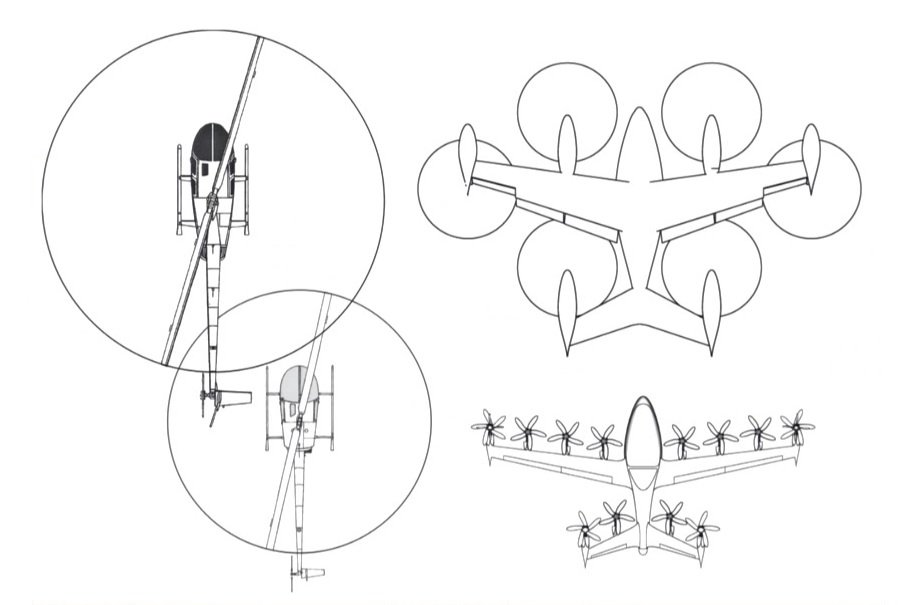
Two very different flying machines — yet closer in capability than you might expect. On one side is the Joby S4, a fully electric aircraft designed for the new era of urban air mobility. On the other, the Robinson R44, a piston-engine helicopter that has been flying reliably since the mid-1990s.
So how far have eVTOLs (electric vertical takeoff and landing aircraft) come? And how close are they to replacing conventional rotorcraft? Let’s break it down.
Why Compare These Two?
At first glance, the comparison may seem odd.
- Joby S4: powered by six tilting electric propellers, promising quiet, emission-free flight.
- Robinson R44: driven by a piston engine with a traditional main rotor system.
Yet both share a mission profile: short-to-medium hops within cities or between metro areas. And both carry a similar payload — four passengers plus a pilot.
Key SpecificationsPayload
- Joby S4: ~450 kg
- Robinson R44: ~420–430 kg (depending on configuration)
👉 Here, Joby has effectively matched a classic light helicopter.
Range
- R44: ~560 km
- Joby S4: ~240 km on a single charge
While the R44 goes more than twice as far, Joby’s range is still sufficient for most urban air taxi missions.
Speed
- Both: ~200–220 km/h
On this front, they’re practically identical.
Energy Use and EfficiencyRobinson R44
- Fuel burn: ~15 gallons Avgas/hour (~45 liters)
- Energy equivalent: ~5,396 megajoules (~1,500 kWh)
Joby S4
- Takeoff: 6–8 kWh/minute
- Cruise: 1.5–2.5 kWh/minute
- Battery pack: ~150 kWh
📊 Comparison:
Even though the R44 flies more than double the distance, it uses 10x more energy than Joby.
➡️ Mile for mile, the Joby S4 is at least 4x more energy efficient.
Noise and Urban Operations
R44: ~95–100 dB (takeoff/landing) — comparable to a chainsaw.
- Joby S4: ~65 dB at 100 meters — closer to city traffic noise.
If Joby’s claims hold, this could be a game-changer for urban mobility, opening the door to operations in noise-sensitive areas.
Certification and Maturity
- R44: Fully certified, with thousands in service worldwide.
- Joby S4: Still in testing, with FAA certification targeted for the late 2020s. However, Joby’s piloted flights already demonstrate that its performance is within reach of expectations.
Verdict
- Range & Reliability → R44 still wins.
- Payload & Speed → Roughly tied.
- Operating Cost & Efficiency → Joby takes the lead.
- Noise & Emissions → Joby is far superior.
Bottom line: A clean-sheet electric aircraft is already this close to a proven helicopter — a sign of how quickly eVTOL technology is maturing.
Can eVTOLs Replace Helicopters?
Not yet. Here’s why:
- The Joby S4 competes only with light helicopters like the R44.
- Medium helicopters (payload 900–2,300 kg) and heavy lifters (4,500–18,000+ kg) remain out of reach for today’s batteries.
That said, hybrid-electric systems could change the equation. Even with onboard generators, eVTOLs would still be ~1.6x more efficient than conventional helicopters.
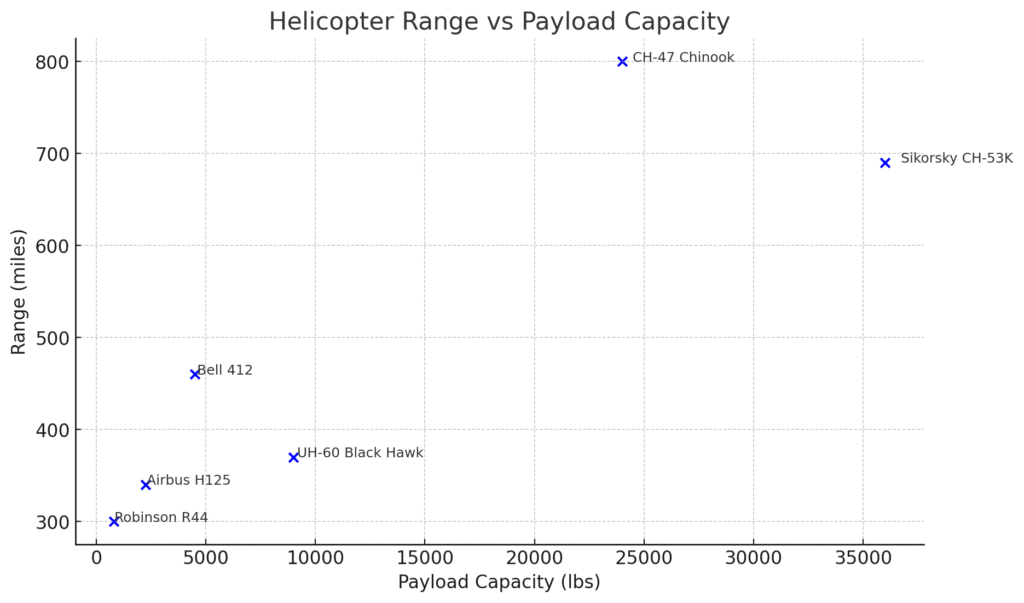
It’s no wonder the military is paying attention, particularly after the retirement of the V-22 Osprey tiltrotor.
Final Thoughts
While the Robinson R44 remains the workhorse of light helicopter operations, the Joby S4 shows just how close eVTOLs are to matching — and in some ways surpassing — traditional rotorcraft.
The next decade will be crucial: if certification stays on track, we could see eVTOLs carving out a major role in urban mobility, emergency response, and beyond.