
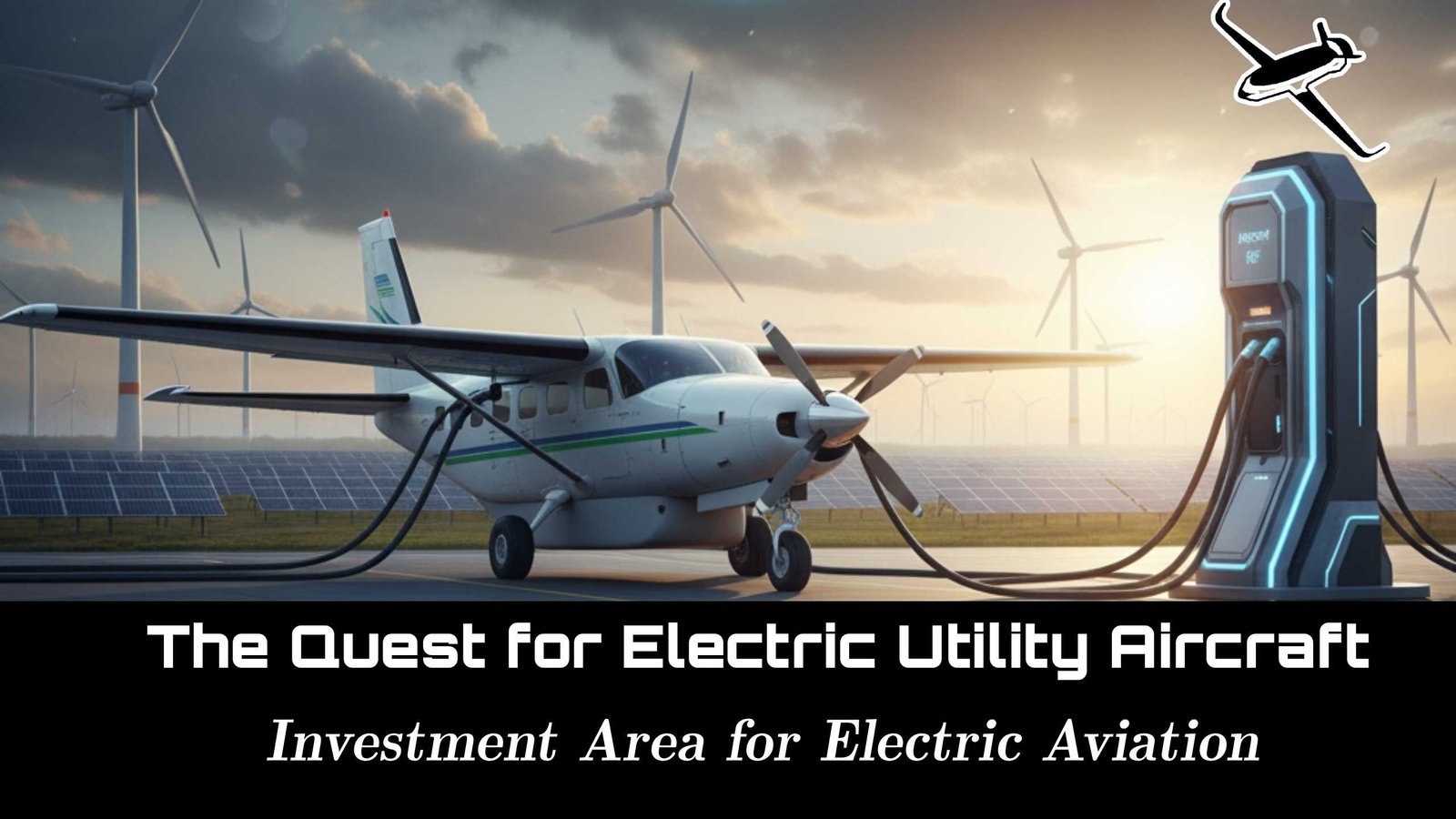
For more than half a century, utility aircraft have been the lifeline of some of the world’s most remote and isolated communities. As their name suggests, these versatile airplanes serve a range of essential functions—transporting people, food, mail, fuel, and medical supplies to places where no road or reliable ground transport exists.
From the frozen tundra of Alaska to the islands of Indonesia, rugged aircraft such as the De Havilland DHC-2 Beaver, Pilatus Porter, and Cessna Caravan have allowed communities not just to survive—but to thrive.
A Lifeline for Remote Communities
Utility aircraft deliver critical services that keep isolated populations connected to the outside world. They move essential goods, facilitate emergency evacuations, and even deliver school materials and government personnel.
In many regions, these aircraft are the only viable mode of transport, capable of operating in harsh weather and rugged terrain where building roads is impractical or impossible.
Across the globe, thousands of communities rely entirely on air transport for year-round access. Consider these examples:
| Region/Country | Air-Reliant Communities |
|---|---|
| Alaska | 201 |
| Canada | ~140 |
| Mexico | 1,471 |
| Indonesia | 487 |
| Kenya | 181 |
| Iceland | 89 |
A conservative global estimate suggests that at least 5,000 communities depend on air transport for essential supplies and connectivity.
For decades, aircraft like the Pilatus PC-6 Porter, Cessna Caravan, Britten-Norman Islander, De Havilland Beaver, and Antonov AN-2 have dominated this niche—offering high payload capacity, short takeoff and landing (STOL) performance, and reliable operation from unprepared strips.
The Shift Toward Electric Aviation
Recent years have seen rapid developments in electric aviation—but most efforts have focused on urban air mobility (UAM) or regional passenger transport. On one hand, we have air taxi startups like Joby Aviation, Archer, and Vertical Aerospace; on the other, regional concepts such as Heart Aerospace’s ES-30 and Eviation Alice.
Yet, electric STOL and Ultra-STOL (USTOL) platforms—arguably the best suited for remote logistics—have received far less attention. Aside from a few exceptions, like the Electra eSTOL, this space remains largely untapped.
That’s surprising, because the market demand is clear: thousands of communities depend on exactly these kinds of aircraft, and eSTOL platforms have a simpler path to certification compared to passenger VTOLs.
Why Electric Propulsion Fits Remote Operations
Electric propulsion offers several key advantages for utility aviation:
- Lower operating costs: Electricity is cheaper than aviation fuel, and electric motors require far less maintenance.
- Autonomy potential: Electric aircraft can more easily incorporate autonomous systems, reducing crew costs and risk.
- Quiet operation: Distributed electric propulsion dramatically reduces noise—critical for environmentally sensitive areas.
- Local energy generation: Remote communities can use solar, wind, or hydro power to generate electricity or hydrogen locally, eliminating the need to transport fuel.
Additionally, distributed electric fans enhance low-speed handling and enable “blown-flap” augmentation, improving short takeoff and landing performance.
According to NASA’s X-57 Maxwell program, energy consumption could be reduced by a factor of three to five even when incorporating STOL capabilities. While the X-57 program was ultimately cancelled due to budget constraints, it provided valuable insights into the potential of electric flight.
Learning from Past Challenges: The Lilium Case
The story of Lilium serves as a cautionary tale. While the German company pushed technological boundaries with its VTOL jet concept, the extreme power requirements for vertical takeoff proved overwhelming.
Vertical flight demanded power eight times greater than cruise, straining battery limits and energy delivery systems. Lilium’s reliance on emerging battery chemistries—and its decision not to pivot toward a STOL configuration—eventually led to its commercial struggles.
Yet, with Archer Aviation’s acquisition of Lilium’s intellectual property, there may still be opportunities to apply that engineering foundation to a more practical STOL-based design.
Emerging Players in Electric Utility Aviation
Two projects in particular stand out in the push toward electric utility aircraft:
1. Elektra Solar – EL-10 Scylax
Germany’s Elektra Solar is developing the EL-10 Scylax, a 10-seat electric aircraft with a 300 km range using existing battery technology. The company has already proven its design philosophy with smaller aircraft, including a 2-seat electric trainer capable of 2.5 hours of endurance on a 30 kWh battery.
Elektra Solar’s efficiency-driven approach, combined with its expertise in solar-integrated wings, makes the Scylax one of the most promising near-term eSTOL contenders. The aircraft is also designed for autonomous operation and produces less than 50 decibels of noise—ideal for frequent operations near small communities.
2. Project Fresson – The Electrified Britten-Norman Islander
In the UK, Project Fresson—a collaboration between Cranfield Aerospace Solutions and Loganair—is working on a hydrogen-electric conversion of the classic Britten-Norman Islander.
Designed for service across the Scottish Isles, the aircraft will use liquid hydrogen fuel cells to power electric motors. The fuel is stored in external tanks mounted under the wings, while the fuel cell stack and cooling systems are neatly packaged within the nacelles.
This smart integration allows the Islander to retain all nine passenger seats while adopting a zero-emission powertrain. With Scotland’s abundant wind and tidal energy, local hydrogen production could make these routes fully sustainable.
Project Fresson represents not just an aircraft, but an ecosystem—where clean energy, advanced propulsion, and community logistics converge.
Conclusion: Building the Future Where Aviation Is Life
For generations, utility aviation has sustained remote communities across the planet. As the industry moves toward electrification, STOL and USTOL platforms stand out as one of the most impactful—and overlooked—frontiers in sustainable flight.
With the right designs, electric propulsion can deliver safer, cleaner, and more capable aircraft at a fraction of the operating cost. The future of electric aviation will not be built only above cities—it will be built in the places where aviation is life itself.