
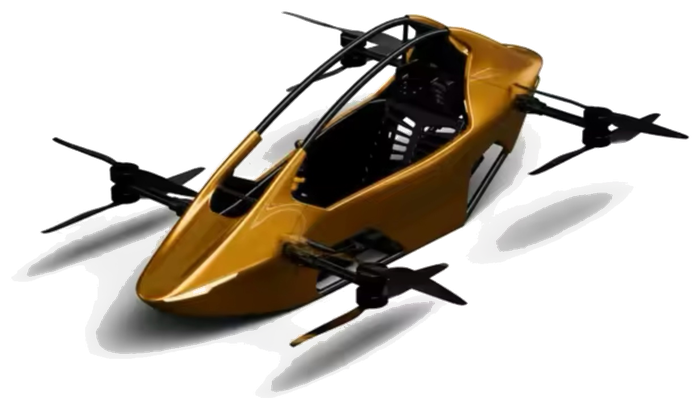
Over the past year, one Chinese personal electric vertical take-off and landing (eVTOL) aircraft manufacturer has been attracting considerable attention in the emerging personal aviation market. That company is YiVTOL, a brand that has been expanding its international presence through competitive pricing, relatively short delivery times and a growing network of distributors.
Written with a “Yi” but pronounced like eVTOL, the brand name appears to be a play on words reflecting its Chinese origins.
YiVTOL aircraft are developed and manufactured by Shenzhen Yingwu Intelligent Technology Co., Ltd., also known as Yingwu Intelligence. The company is headquartered in Shenzhen, one of China’s major centres for the rapidly developing low-altitude economy and a growing hub for electric aircraft development.
According to the manufacturer, at least 75 aircraft have now been delivered worldwide. Its website lists deliveries to Poland, Russia, the UAE, the United States, Saudi Arabia, Brazil, Argentina and Hong Kong, among other markets. This international presence appears to be expanding as the company continues to attract buyers and distributors.
But what makes YiVTOL particularly interesting is not simply the number of aircraft being sold. It is the combination of affordability, aircraft technology, battery development and an increasingly comprehensive package of features that distinguishes it from many other personal eVTOL manufacturers.
Why Is YiVTOL Becoming So Popular?
There appear to be three primary factors behind YiVTOL’s growing popularity: competitive pricing, incentives for distributors and relatively short delivery times.
Yingwu Intelligence has reportedly delivered aircraft within 30 to 60 days of order confirmation in most cases. This is considerably shorter than the waiting periods associated with some competing personal eVTOLs.
For comparison, advertised delivery slots for the Jetson ONE currently extend into 2028, representing a waiting period of at least one and a half years.
Another factor contributing to YiVTOL’s international expansion is the relatively straightforward import process offered by certain distributors.
For example, one US distributor advertises an import package starting at $19,900, covering tariffs, customs clearance and air freight delivery directly to the customer’s address. According to the listing, the package also includes a factory test pilot travelling to the buyer’s location to provide training.
This is an import and delivery package rather than the aircraft’s base purchase price. Prospective buyers should confirm exactly what is included, particularly as import requirements, taxes and logistical costs can differ considerably between countries.
YiVTOL aircraft are also being marketed internationally under several different brand names, including Cloud Rider, Rise Vertical and Slinger Aviation. Some distributors use their own branding alongside YiVTOL’s original identity.
This may partly explain why the aircraft themselves are becoming increasingly recognisable, even though the name Yingwu Intelligence remains relatively unfamiliar outside China.
YiVTOL Aircraft Design: Similar to the Jetson ONE, but with Key Differences
At first glance, YiVTOL follows an increasingly familiar design philosophy in the personal eVTOL market.
Like the Jetson ONE, it features a single-seat cockpit surrounded by eight electric motors arranged in a coaxial quadcopter configuration.
However, YiVTOL uses larger propellers, which can improve propulsion efficiency by reducing disc loading. This allows the aircraft to make better use of its available battery energy and contributes to its advertised flight endurance.
Although several manufacturers offer aircraft based on similar configurations, there are some notable aspects of YiVTOL’s development that warrant closer examination.
Yingwu Intelligence presents itself as a dedicated aircraft developer with research and academic connections, rather than simply an assembler of commercially available drone components.
The company also reports having secured the first Civil Aviation Administration of China (CAAC) Special Flight Permit for an ultralight eVTOL aircraft in China.
This is an important achievement claimed by the manufacturer, particularly as China’s low-altitude aviation sector continues to develop its regulatory and certification framework.
Safety Features: An Airbag and Ballistic Parachute
One particularly interesting aspect of YiVTOL’s recent development is its work on additional safety systems.
The company has been testing a belly-mounted airbag system designed to cushion the aircraft in the event of an impact.
This could be especially useful during low-altitude operations, where a conventional ballistic parachute may not have sufficient height or time to deploy effectively.
A ballistic parachute is also available as an optional safety feature.
According to the latest price list, YiVTOL offers the following optional equipment:
| Optional equipment | Listed price |
|---|---|
| Combined airbag and ballistic parachute system | $20,000 |
| Additional set of two batteries | $10,000 |
| GPS anti-jamming device | $10,000 |
These additions are relatively expensive when compared with the aircraft’s base price.
There is also an important engineering trade-off to consider. Every additional safety system or battery pack increases the aircraft’s weight, potentially affecting payload capacity and flight endurance.
Nevertheless, the development of these systems indicates that Yingwu Intelligence is exploring ways to improve the safety and functionality of its personal eVTOL aircraft.
The actual effectiveness of these systems, particularly the airbag during different types of impact, would ultimately need to be established through appropriate testing.
YiVTOL Models, Specifications and Prices
YiVTOL currently advertises four variants of its personal eVTOL platform: the S-Zero, S-Zero Plus, S-Zero Lite and S-Zero Max.
Although the aircraft share the same fundamental design philosophy, they differ in battery configuration, payload capacity, flight endurance and exterior styling.
| Model | Advertised payload | Advertised flight time | Price |
|---|---|---|---|
| S-Zero | 90 kg | 15 minutes | $59,000 |
| S-Zero Plus | 120 kg | 25 minutes | $79,000 |
| S-Zero Lite | 120 kg | 25 minutes | $99,000 |
| S-Zero Max | Not specified | 40 minutes | $139,000 |
S-Zero: The Entry-Level Model
The base S-Zero is the most affordable aircraft in the range, with a listed price of $59,000.
It has an advertised payload capacity of 90 kilograms and a flight endurance of 15 minutes.
Its battery configuration is smaller than those of the higher-end models, making it a comparatively lightweight option.
This is particularly relevant to buyers in the United States who may be interested in operating under the FAA’s Part 103 ultralight regulations.
S-Zero Plus and S-Zero Lite
The S-Zero Plus is priced at $79,000, while the S-Zero Lite is listed at $99,000.
Both aircraft advertise a payload capacity of 120 kilograms and a flight endurance of 25 minutes.
Their listed battery capacities are identical, with exterior styling being one of the more obvious differences between the two aircraft.
Both models also feature landing skids, distinguishing them from the base S-Zero configuration.
S-Zero Max: The Longest-Endurance Variant
At the top of the range is the S-Zero Max, priced at $139,000.
This version incorporates the largest battery configuration in the range, consisting of four battery packs, and advertises a flight endurance of 40 minutes.
It also features landing skids and an enclosed canopy that opens in a clamshell arrangement.
An important consideration is that increasing battery capacity does not produce a proportional increase in flight endurance.
Additional batteries increase the energy available for propulsion, but they also increase the mass that the aircraft must lift. Consequently, the additional energy must compensate for the increased power required to remain airborne.
All the quoted flight endurance figures are manufacturer-advertised values. Actual endurance will depend on factors such as pilot weight, ambient conditions, flight profile and the battery reserve remaining at landing.
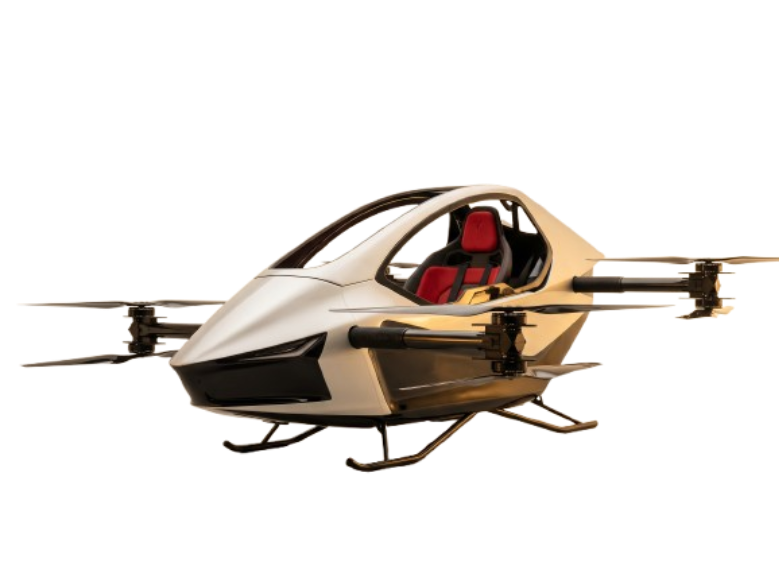
S-Zero Max Version
Can YiVTOL Aircraft Qualify Under FAA Part 103?
One of the most important considerations for US buyers is whether a particular YiVTOL model qualifies for operation under FAA Part 103, which governs ultralight vehicles.
Among its requirements, Part 103 specifies an empty-weight limit of 254 lb (115 kg) for powered ultralight vehicles.
For an electric aircraft, the battery weight must also be considered when determining whether the aircraft meets this limit.
Based on the available specifications, the base S-Zero appears to be the only variant potentially meeting this requirement. The same cannot be established with certainty for the other three models.
There are discrepancies between published empty-weight figures, and the weight of optional equipment also needs to be clarified.
Even relatively modest additions, such as a ballistic parachute or supplementary safety system, could affect an aircraft’s compliance with the weight limit.
Part 103 also includes restrictions on maximum level-flight speed, which must remain below the applicable limit of 102 km/h (63 mph), alongside other operational and performance requirements.
Another important point is that Part 103 is intended for recreational or sporting use only.
For example, someone purchasing an eVTOL to inspect a ranch or monitor livestock would need to establish whether their intended activities qualify as recreational flying or constitute an operation undertaken for work.
Prospective owners should therefore verify the regulatory status of their particular aircraft configuration and intended use before purchase.
YiVTOL Battery Technology: Active Cooling and Possible Semi-Solid-State Cells
The battery system is arguably one of the most interesting technical aspects of YiVTOL’s aircraft.
Unlike many personal eVTOLs that rely primarily on passive air cooling, YiVTOL employs an active air-cooling system for its battery packs.
This can help reduce cell temperatures during operation, particularly when the batteries are subjected to the substantial discharge rates associated with vertical flight.
However, active air cooling has its limitations, and its effectiveness depends on factors such as airflow distribution, ambient temperature and the thermal design of the battery pack.
Does YiVTOL Use Semi-Solid-State Batteries?
The precise battery chemistry used by YiVTOL has not been independently confirmed.
However, in a reported interview with the China Business Journal, company co-founder Chen Yuan described the aircraft as using semi-solid-state batteries, with approximately half an hour of flight endurance and around 40 kilometres of range per charge.
If accurate, this would represent an interesting technological development.
Semi-solid-state lithium-ion batteries are among the more advanced battery technologies being developed for applications requiring high energy density.
It is also possible that such batteries are reserved for the higher-tier YiVTOL variants rather than being used across the entire product range.
At present, however, the available information is insufficient to confirm which models use this technology.
What Do the Battery Voltages Reveal?
Images of YiVTOL’s battery-monitoring interface provide some additional clues about the cell chemistry.
Individual cell voltages shown on the interface appear to be in the region of 4.1 to 4.3 volts.
Assuming these readings accurately represent individual battery cells, they are more consistent with a higher-voltage lithium-ion chemistry, potentially nickel manganese cobalt (NMC), than with lithium iron phosphate (LFP).
These voltage readings would therefore effectively rule out conventional LFP chemistry for the cells shown.
Other available battery information indicates the use of 60-amp-hour cells in the base S-Zero and 80-amp-hour cells in the S-Zero Max.
The exact cell manufacturer, chemistry and construction remain important details that would benefit from further clarification.
Battery Lifespan and Replacement Costs
Battery ageing is another important consideration for prospective YiVTOL owners.
Personal eVTOL aircraft place considerable demands on their battery systems, particularly during take-off, landing and hovering, when electrical power requirements can be substantial.
Battery degradation depends on several factors, including operating temperature, discharge rate, depth of discharge and charging practices.
Although YiVTOL’s active air-cooling system may help control battery temperature, it cannot eliminate the effects of repeated high-power operation.
A replacement interval of approximately 400 cycles or twelve months, whichever comes first, has been mentioned.
At that point, the battery capacity is expected to remain above 80% of its initial value.
For owners, this means battery replacement could represent a significant ongoing ownership expense, even if the aircraft is flown relatively infrequently.
The availability, replacement cost and maintenance requirements of the batteries should therefore be considered alongside the initial purchase price.
Airframe Construction and Materials
YiVTOL describes its aircraft as using a combination of titanium tubing and carbon-fibre body panels.
This is an attractive material combination for a lightweight aircraft.
Titanium offers high specific strength and corrosion resistance, while carbon-fibre composite panels can provide lightweight, aerodynamically shaped structures.
However, the overall empty weight of the aircraft remains a particularly important specification, especially for owners hoping to operate under ultralight regulations.
Clarifying the weight of each aircraft variant, including its installed battery system and optional equipment, would help prospective buyers better understand the aircraft’s performance and regulatory eligibility.
Ground-Control Station: A Useful Feature with Regulatory Questions
Another notable feature of YiVTOL is its ground-control station, which includes a joystick and monitoring interface.
This system provides several functions beyond the aircraft’s onboard flight controls.
It allows the aircraft to be operated remotely, while also offering diagnostic capabilities such as monitoring individual battery cells and independently testing each of the eight motors during pre-flight inspections.
These functions could be particularly useful for maintenance, troubleshooting and aircraft preparation.
However, the remote-control capability raises an important regulatory question.
Recent reports have suggested that the FAA may treat aircraft operated through a ground-control station as drones rather than conventional ultralight vehicles.
If this interpretation applies to YiVTOL, it could affect the aircraft’s eligibility to operate under Part 103.
One possible solution would be to restrict the ground-control station’s ability to operate the aircraft remotely while retaining its battery monitoring, motor testing and diagnostic functions.
The precise regulatory implications would need to be clarified with the FAA, particularly for aircraft intended for the US market.
Is YiVTOL a Better Alternative to Jetson ONE and Hornet H1?
The market for personal electric aircraft is becoming increasingly competitive, with numerous manufacturers, particularly in China, developing single-seat multicopter aircraft.
Against this backdrop, YiVTOL appears to offer an interesting combination of technology, competitive pricing and international distribution.
Its larger propellers, active battery cooling, optional safety equipment, ground-based diagnostic capabilities and range of aircraft variants distinguish it from some competing designs.
The company also appears to have developed a comparatively comprehensive commercial package, with distributor support and relatively short delivery times.
Depending on the selected model, equipment and import costs, YiVTOL can also be purchased at a lower price than competing personal eVTOLs such as the Jetson ONE and Hornet H1.
Nevertheless, this remains an expensive purchase.
The advertised factory price is only the starting point. Shipping, import duties, taxes, training, optional safety systems, maintenance and eventual battery replacement can all contribute significantly to the total cost of ownership.
There are also important unanswered questions concerning battery chemistry, aircraft empty weight, the performance of optional safety systems and regulatory eligibility.
Final Thoughts
YiVTOL is emerging as an interesting contender in the personal electric aircraft market.
With at least 75 reported deliveries worldwide, a growing international distribution network and aircraft prices starting at $59,000, Yingwu Intelligence appears to be making progress in commercialising personal eVTOL technology.
The availability of four variants also gives prospective buyers a choice between a relatively lightweight entry-level aircraft and more capable configurations with greater payload and endurance.
From an engineering perspective, the active battery cooling system, potential use of semi-solid-state technology and development of an airbag safety system are particularly noteworthy.
However, prospective buyers should look beyond the advertised performance figures and examine the aircraft’s actual configuration, battery replacement requirements and applicable regulations.
For US buyers in particular, confirming that the aircraft, including its batteries, remains within the 115 kg (254 lb) empty-weight limit, and that it satisfies the 102 km/h (63 mph) level-flight speed restriction, is essential for potential Part 103 operation. All other applicable Part 103 requirements must also be satisfied.
Ultimately, YiVTOL’s increasing international presence suggests that competitively priced Chinese personal eVTOLs could play a significant role in shaping the emerging personal electric aviation market.